
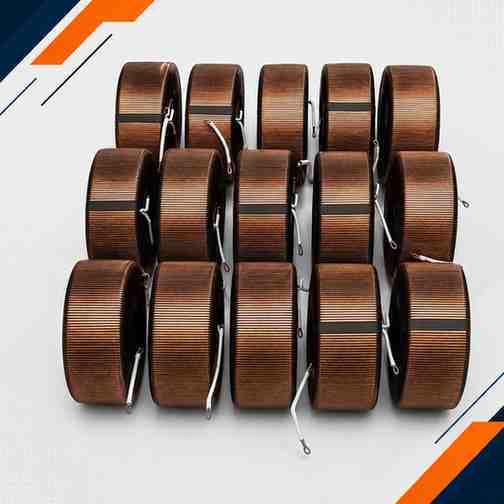
When procuring a voltage stabilizer or industrial transformer, the most critical engineering choice is the winding conductor material used in the buck-boost transformer and toroidal variac coils: copper vs aluminium stabilizer.
Copper vs Aluminium Stabilizer (Quick Verdict):
- Copper Stabilizers: 98.5%+ electrical efficiency, 15+ years operational lifespan, 68% faster heat dissipation. Ideal for industrial manufacturing, CNC centers, hospitals, and 24/7 continuous loads.
- Aluminium Stabilizers: 25%–30% lower initial purchase cost, but 2.5× higher internal power loss (I²R), bulkier enclosures, and susceptibility to terminal oxidation over time.
While aluminium stabilizers carry a lower initial price tag, 100% electrolytic copper winding is the gold standard for commercial and industrial installations. Below is a detailed technical comparison of material science, energy efficiency, thermal dynamics, and 5-year operating costs.
Aluminium vs Copper Stabilizer — Is There a Difference?
Whether you search copper vs aluminium stabilizer or aluminium vs copper stabilizer, the engineering comparison is the same — and the answer is clear. Copper winding delivers 100% IACS electrical conductivity versus just 61% IACS for aluminium. This single difference drives every downstream performance gap: lower resistive heat loss, a more compact transformer core, faster thermal dissipation, and a significantly longer operational lifespan. The sections below quantify each factor.
1. Material Science & Electrical Properties
The performance of an electromagnetic winding depends primarily on electrical conductivity and thermal dissipation:
| Material Property | Electrolytic Copper (Cu) | Commercial Aluminium (Al) | Engineering Impact |
|---|---|---|---|
| Electrical Conductivity | 100% IACS | ~61% IACS | Aluminium requires ~60% larger cross-section for same current |
| Resistivity | 1.68 × 10⁻⁸ Ω·m | 2.82 × 10⁻⁸ Ω·m | Lower resistance means lower heat & power loss in copper |
| Thermal Conductivity | ~398 W/m·K | ~237 W/m·K | Copper dissipates heat 68% faster, preventing insulation breakdown |
| Tensile Strength | 200–400 MPa | 70–200 MPa | Copper withstands mechanical stress during short-circuit faults |
| Coefficient of Expansion | 16.5 × 10⁻⁶ / K | 23.1 × 10⁻⁶ / K | Aluminium expands more under load, risking terminal loosening |
| Oxidation Resistance | High (conductive oxide) | Prone to non-conductive oxide | Aluminium connections require bi-metallic crimping to prevent hotspots |
flowchart TD
  subgraph Copper["🥇 Copper Winding"]
      C1["High Conductivity (100% IACS)"] --> C2["Lower I²R Resistance Loss"]
      C2 --> C3["Superior Efficiency (>98%)"]
      C3 --> C4["Compact Core & 15+ Year Life"]
  end
  subgraph Aluminium["🥈 Aluminium Winding"]
      A1["Lower Conductivity (61% IACS)"] --> A2["Higher Operating Heat & Loss"]
      A2 --> A3["Bulkier Core Required"]
      A3 --> A4["Higher Lifetime Energy Cost"]
  end
  style Copper fill:#EEF2FF,stroke:#1152D4,stroke-width:2px
  style Aluminium fill:#F8FAFC,stroke:#64748B,stroke-width:1px
2. Power Loss & Operating Cost Comparison
Stabilizers operate continuously (often 24 hours a day, 365 days a year). The internal power loss of a transformer winding is governed by Joule’s Law of heating:
Power Loss = I² × R (where I is current and R is winding resistance)
Because aluminium has higher electrical resistivity than copper, an aluminium-wound stabilizer exhibits greater internal heating and energy wastage. Over a standard 5-year operating period, the higher energy losses of aluminium frequently exceed the initial purchase price difference.
5-Year Energy Cost Example (100 kVA Stabilizer at 80% Average Load):
- Copper Winding (98.5% Efficiency): ~1.2 kW continuous internal loss × 8,760 hours/yr × ₹8.50/unit = ~₹89,350 / year.
- Aluminium Winding (96.0% Efficiency): ~3.2 kW continuous internal loss × 8,760 hours/yr × ₹8.50/unit = ~₹238,270 / year.
- Net Annual Energy Savings with Copper: ₹148,920 per year.
Over 5 years of industrial operation, a 100 kVA copper stabilizer saves over ₹7,00,000 in electricity bills alone, easily offsetting the initial price difference.
3. Reliability Under Short-Circuit & Overload Conditions
Industrial power grids frequently experience inrush surges and occasional downstream short circuits:
- Mechanical Rigidity: During high-current faults, electromagnetic forces exert physical stress on transformer coils. Copper’s higher tensile strength prevents coil deformation and insulation tearing.
- Thermal Inertia: Copper handles temporary overload conditions without exceeding class-H insulation thermal thresholds (180°C).
- Terminal Connections: Aluminium is susceptible to “creep” (gradual metal deformation under pressure), which can cause terminal bolts to loosen over time, leading to sparking, arcing, and contact failure.
4. How Buyers Can Verify Pure Copper Winding
- Weight Inspection: Copper has a density of 8.96 g/cm³ compared to aluminium’s 2.70 g/cm³. A genuine copper-wound stabilizer of identical rating is substantially heavier than an aluminium unit.
- Coil Cross-Section Check: Copper wires have a distinctive reddish-gold luster when the outer insulation enamel is gently scraped at lead terminals.
- Manufacturer Test Certificate: Always request an official test certificate specifying 100% electrolytic grade copper conforming to IS:13778 / IS:9815 standards.
Frequently Asked Questions
Is an aluminium stabilizer suitable for 24/7 continuous industrial duty?
For continuous 24/7 industrial factory use, an aluminium stabilizer is generally not recommended. Because aluminium has 60% higher electrical resistance, continuous heavy loads cause higher internal temperatures, accelerating insulation degradation. Copper stabilizers run significantly cooler and have double the working life.
What is the price difference between copper and aluminium stabilizers in India?
An aluminium-wound stabilizer typically costs 20% to 30% less upfront than a 100% copper-wound stabilizer. However, for a 50 kVA or 100 kVA unit, the higher annual electrical power loss (I²R losses) of aluminium typically erases that purchase price difference within the first 12 to 18 months of operation.
Why ServoKai Uses 100% Electrolytic Copper
At ServoKai System, every single-phase and three-phase servo voltage stabilizer, autotransformer dimmer, and isolation transformer is engineered with 100% electrolytic-grade copper wire and CRGO core laminations.
We guarantee maximum efficiency, minimal heat generation, and reliable 15+ year operational life backed by our manufacturer warranty.
Browse our copper-wound servo stabilizer range or contact our technical team for factory-direct specifications.